
Disclosure: This post contains affiliate links. We may earn a small commission if you purchase through our links, at no extra cost to you. We only recommend products we've thoroughly researched.
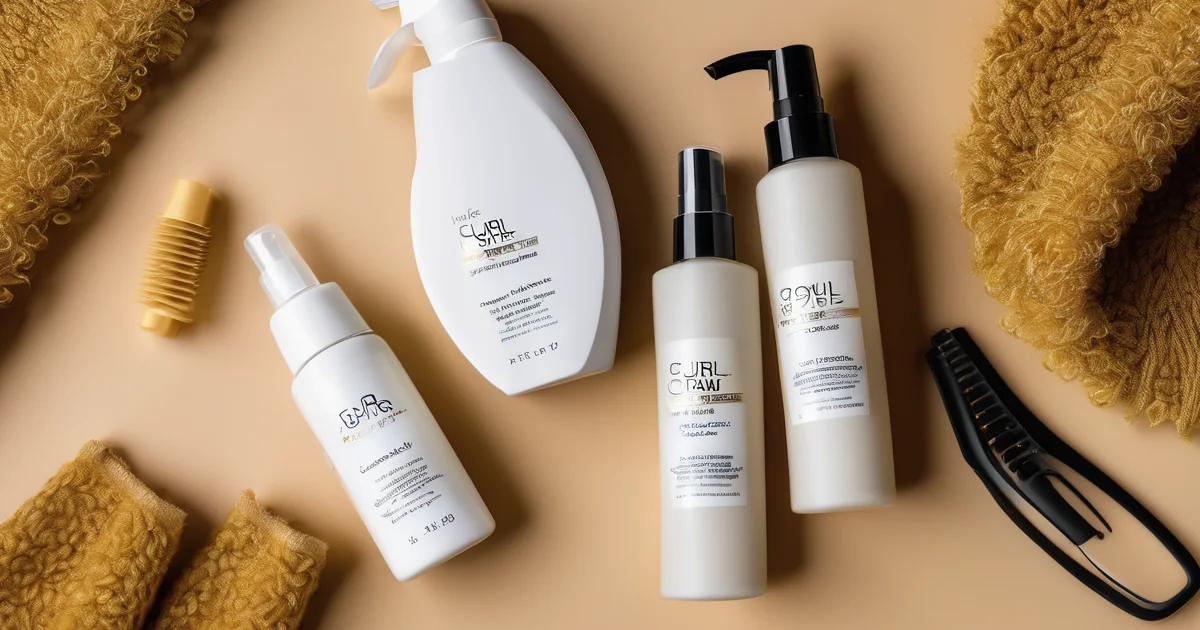
Starting a curly hair routine for the first time involves unlearning everything you've been doing to manage "unruly" hair — and replacing it with a system designed for what curly hair actually needs. The curly hair community has developed a well-documented framework (often called the Curly Girl Method or CGM) that produces transformative results for most curl types when followed consistently.
This beginner's guide covers the complete fundamentals: your curl type, what curly hair actually needs, the right products and techniques, and what to expect in the transition period.
Understanding Your Curl Type
The most widely used curl classification system (Andre Walker's, adapted):
Type 2 — Wavy Hair
- 2A: Loose, gentle waves with minimal definition; often falls flat closest to roots
- 2B: More pronounced S-waves, some frizz; medium texture
- 2C: Strong waves, some coils beginning to form; prone to frizz; thicker texture
Type 3 — Curly Hair
- 3A: Large, loose curls (circumference of a wine cork); defined, shiny, some frizz
- 3B: Medium-sized curls (circumference of a Sharpie marker); springier, denser
- 3C: Tight curls/coils (circumference of a pencil); dense, voluminous, prone to shrinkage
Type 4 — Coily Hair
- 4A: Tightly coiled curls with visible S-pattern; dense, defined with moisture
- 4B: Less defined curl pattern, more Z-shaped; shrinks significantly
- 4C: Very tight coils, least visible definition, highest shrinkage (50–75%)
Why type matters: Different curl types have different structural characteristics and different product needs. 2A waves need lighter products than 4C coils. Understanding your type helps you interpret product recommendations specific to your texture.
What Curly Hair Actually Needs
Moisture: Curly hair's spiral structure prevents the scalp's natural sebum from traveling down the hair shaft as effectively as it can on straight hair — making curly hair inherently drier than straight hair. Hydration is the foundational curly hair need.
Protein: Curly hair has a flattened or elliptical cross-section (rather than round like straight hair) that makes it more porous and more prone to structural damage. Periodic protein treatments strengthen the keratin structure and reduce breakage.
Reduced manipulation: Every brush stroke, every time you touch your hair, causes friction that disturbs curl pattern and causes frizz. Curly hair routines minimize manipulation — especially when dry.
No sulfates (for most curl types): Sulfates (SLS, SLES) are effective cleansers but too stripping for the naturally drier curl profile, particularly types 3 and 4. Sulfate-free cleansers maintain moisture balance while cleaning.
No silicones (without sulfate co-wash): Silicones (dimethicone, cyclomethicone) provide slip and shine but build up on the hair shaft over time if not removed by sulfates. The CGM approach typically excludes silicones OR requires regular sulfate clarifying to remove silicone buildup.
The Basic Curly Hair Routine: Step by Step
Step 1: Clarifying (Monthly)
Before starting a new curly routine, clarify to remove product buildup, silicone deposits, and mineral deposits from hard water. This is the "reset" that allows subsequent products to penetrate.
Products:
- DevaCurl Buildup Buster Micellar Water Cleansing Serum (~$24) — specifically designed for curly hair clarifying
- SheaMoisture Clarifying Shampoo (~$10) — sulfate-free clarifying with apple cider vinegar
After clarifying, the curl pattern is revealed without interference — this is what your natural curl looks like "starting clean."
Step 2: Co-Wash or Shampoo (Every Wash)
For Type 3 and 4 hair: co-washing (conditioner washing — using only conditioner as the cleanser) is the primary wash method. For Type 2 wavy hair: a lightweight sulfate-free shampoo is often preferable (co-washing can be too heavy for fine wavy hair, causing limpness).
Sulfate-free shampoos (for wavy/curly):
- As I Am Coconut CoWash Cleansing Conditioner (~$12) — the most widely used co-wash; works for 3A–4C curl types
- SheaMoisture Manuka Honey & Mafura Oil Intensive Hydration Shampoo (~$13) — rich, moisturizing sulfate-free shampoo for 3B–4C
- Maui Moisture Curl Quench Coconut Oil Shampoo (~$10) — lighter option for wavy and loose curl types
Step 3: Deep Condition (Weekly)
Deep conditioning is the most impactful single step for curly hair health. Apply after co-washing, sit for 15–30 minutes with a shower cap + heat (or in a warm shower), then rinse.
Deep conditioners by curl type:
- Type 2 wavy: Briogeo Don't Despair, Repair! Deep Conditioning Mask (~$38) — protein + moisture balance for fine wavy hair
- Type 3 curly: Mielle Organics Babassu Oil & Mint Deep Conditioner (~$12) — moisture-rich, defines curls
- Type 4 coily: Camille Rose Naturals Algae Renew Deep Conditioning Mask (~$18) — intense moisture for 4B/4C hair
Step 4: Leave-In Conditioner (Every Wash)
Applied immediately after rinsing the deep conditioner, while hair is saturated with water. Leave-in provides the moisture foundation that styling products are applied over.
Leave-ins by curl type:
- Wavy (2A-2C): Kinky-Curly Knot Today Leave-In Conditioner (~$14) — lightweight, doesn't weigh down waves
- Curly (3A-3C): SheaMoisture Coconut & Hibiscus Curl Enhancing Smoothie (~$11) — medium weight, defines curls
- Coily (4A-4C): As I Am Hydration Elation Intensive Conditioner (~$12) — rich leave-in for high porosity coily hair
Step 5: Styling Products (Every Wash)
The styling step is where curl definition is achieved and frizz is controlled. The most common approach: cream or custard for definition, gel for hold.
Apply to soaking wet hair — application on fully wet hair allows the product to distribute evenly and coats each curl before the frizz-activating drying process begins.
Popular method (LCO or LOC):
- Leave-in (already applied)
- Cream or Curl Milk
- Oil (to seal)
or
- Leave-in
- Oil
- Cream
Gel (to finish): Applied after the cream, gel creates a cast (crunchy film) over the curl that locks in definition. The cast is broken after drying by scrunching with hands — revealing soft, defined curls underneath.
Styling products by curl type:
- Wavy: Not Your Mother's Curl Talk Gel (~$10) — lightweight definition without crunch
- Curly: Ecoslay Orange Marmalade Gel (~$18) — protein-rich, excellent for 3B-4A curls
- Coily: Eco Style Olive Oil Styling Gel (~$3) — affordable, flexible hold for 4B-4C styling
Step 6: Drying Method
Diffuse (preferred): Use a blow dryer with a diffuser attachment on low heat. Cup the diffuser under sections of hair and hold for 30–60 seconds each section. Diffusing produces defined curls with volume and eliminates the flat roots that air drying can cause.
Air dry: Minimal heat damage. Takes 2–6 hours depending on thickness. Best for type 4 hair that's more vulnerable to heat. Can cause flat roots if lying down during drying.
Plopping: Wrap wet hair in a microfiber towel or t-shirt for 10–30 minutes before diffusing or air drying. Encourages curl pattern formation by keeping curls bunched together in an upward position.
Never: Rub with a terry cloth towel (causes frizz and breakage), brush or comb when dry (destroys curl pattern).
The CGM Transition: What to Expect
Week 1–2: Initial clarifying reveals your actual curl pattern, possibly for the first time without heat damage and silicone coating. Curls may look frizzy and undefined — this is normal as your hair adjusts.
Week 3–6: Curls begin to define more consistently as moisture levels improve. Some "bad hair days" are common during this period as hair adjusts to the new routine.
Week 8–12: Consistent curl definition, significantly reduced frizz, and improved hair health should be visible. This is when most people see the "before/after" difference that motivates sustained routine maintenance.
Why patience is essential: Hair that's been heat-styled and silicone-coated for years has adapted to that environment. The curl pattern has been disrupted and the cuticle is in a compromised state. The CGM transition takes time to show what the hair can do under optimal conditions.
Beginner Curl Product Kit by Curl Type
| Curl Type | Cleanser | Leave-In | Gel/Cream | Approx. Cost |
|---|---|---|---|---|
| 2a–2b Wavy | DevaCurl No-Poo Decadent (~$24) | Kinky-Curly Knot Today (~$14) | Not Your Mother's Curl Talk Gel (~$10) | ~$48 |
| 2c–3a Wavy-Curly | As I Am Coconut CoWash (~$12) | SheaMoisture Curl Enhancing Smoothie (~$11) | Ecoslay Orange Marmalade Gel (~$18) | ~$41 |
| 3b–3c Curly | DevaCurl One Condition (~$26) | Ouai Leave-In Conditioner (~$26) | Aunt Jackie's Don't Shrink Flaxseed Gel (~$9) | ~$61 |
| 4a–4c Coily | Mielle Organics Avocado Mask as co-wash (~$12) | As I Am Hydration Elation Leave-In (~$12) | Eco Style Olive Oil Gel (~$3) | ~$27 |
Wavy (Type 2) Starter Kit ~$40
- DevaCurl No-Poo Decadent Cleanser (~$24) — moisturizing sulfate-free cleanser
- Kinky-Curly Knot Today Leave-In (~$14)
- Not Your Mother's Curl Talk Gel (~$10)
Curly (Type 3) Starter Kit ~$35
- As I Am Coconut CoWash (~$12)
- SheaMoisture Coconut & Hibiscus Curl Enhancing Smoothie (~$11)
- Ecoslay Orange Marmalade Gel (~$18)
Coily (Type 4) Starter Kit ~$30
- Mielle Organics Moisturizing Avocado Hair Mask as co-wash (~$12)
- As I Am Hydration Elation Leave-In (~$12)
- Eco Style Olive Oil Gel (~$3)
Frequently Asked Questions
Q: How often should I wash curly hair?
A: Curly hair typically benefits from washing 1–3 times per week. Type 2 wavy hair may need washing every 2–3 days to prevent limp waves from product buildup. Type 4 coily hair can go 7–14 days between wash days with proper maintenance (pineapple sleeping method, satin cap, refreshing sprays between washes). The right frequency depends on how quickly your scalp produces oil and how quickly products build up.
Q: Do I need to do the full curly girl method or can I do a modified version?
A: Modified CGM is extremely common — many people use sulfate-free shampoo (instead of co-washing only), or keep a few silicone products while clarifying regularly, or use heat occasionally with proper protection. The CGM framework works best when followed consistently, but strict adherence to every rule isn't required for significant improvement. Start with the fundamentals (sulfate-free cleansing, leave-in conditioner, gel for definition, diffuse or air dry) and adjust based on your hair's response.
Q: Why does my hair get crunchy after styling with gel?
A: The crunch is the gel cast — a temporary film the gel forms over the curls to lock in definition while drying. It's normal and intentional. Once hair is completely dry (fully dry, not just surface dry), scrunching the hair between your palms breaks the cast and reveals the soft, defined curls underneath. Scrunching while still wet or damp creates frizz. Wait until fully dry.
Q: Is the curly girl method suitable for all ethnicities with curly hair?
A: The CGM framework was developed primarily for Western curly/wavy hair and has limitations for some hair types. Type 4 coily hair, particularly 4C, often requires modifications beyond CGM basics — heavier butters, different layering methods (LOC vs. LCO), and longer protective style periods. The CGM community has expanded to include more type 4 specific guidance, but seeking type 4-specific resources (NaturallyCurly.com's type 4 sections, Camille Rose YouTube) provides more targeted information for coily hair textures.
Conclusion
A consistent curly hair routine transforms hair that fights you into hair that works with you. The fundamentals — sulfate-free cleansing, leave-in conditioning, styling on wet hair with a hold product, and protecting curls from friction — apply across all curl types. The products and exact techniques vary by curl type and porosity.
Be patient with the transition. Curl transformation takes weeks to months. What your curl looks like at week 12 of a consistent routine is dramatically different from what it looks like on day 1 of trying new products.
Continue with hair porosity explained — find your type and how to grow hair faster.
0 Comments
Leave a Comment
Your email won't be published. Comments are moderated.
No comments yet. Be the first to share your thoughts!