
Disclosure: This post contains affiliate links. We may earn a small commission if you purchase through our links, at no extra cost to you. We only recommend products we've thoroughly researched.
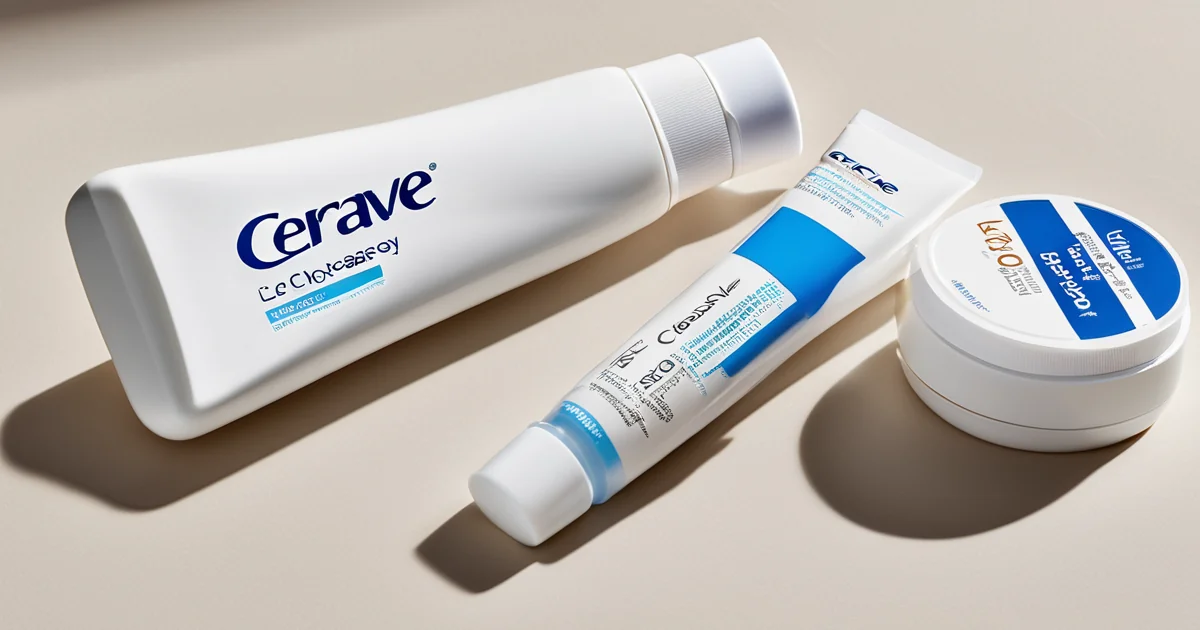
Walk into any dermatologist's office and ask which skincare brand they recommend, and the answer will almost certainly be CeraVe, La Roche-Posay, or both. These two brands dominate the drugstore skincare conversation for a reason: they're formulated with clinically proven ingredients, priced accessibly, and backed by decades of dermatological research. But when you're standing in the pharmacy aisle choosing between them, the differences matter.
In the CeraVe vs La Roche-Posay debate, there's no single winner — there's a winner for your skin type, your concerns, and your specific product category. This guide breaks it down head-to-head across every major category so you can shop with confidence.
Brand Overview: CeraVe
Founded: 2005 (USA)
Parent company: L'Oréal (acquired 2017)
Core philosophy: Clinically developed with dermatologists, built around the MVE (Multivesicular Emulsion) delivery system and the ceramide complex
Hero ingredients:
- Ceramides (NP, AP, EOP): The three ceramides that make up the most critical components of the human skin barrier. CeraVe's ceramide complex is the cornerstone of almost every product in the range
- Hyaluronic acid: Multi-depth hydration in most moisturizers and serums
- Niacinamide: Added to cleansers and moisturizers for barrier support and brightening
- MVE technology: A patented delivery system that releases active ingredients gradually over 24 hours rather than all at once
Price range: $10–$25 for most face products
CeraVe's strength: Barrier repair and long-lasting hydration. Products are designed to restore and maintain a healthy skin barrier — making them particularly excellent for dry, eczema-prone, or over-cleansed skin.
CeraVe's weakness: Limited range for targeted concerns like anti-aging, brightening, or specific skin conditions beyond dryness and sensitivity.
Brand Overview: La Roche-Posay
Founded: 1975 (France) — named after the French spa town La Roche-Posay, famous for its selenium-rich thermal spring water
Parent company: L'Oréal (acquired 1989)
Core philosophy: Clinically tested for sensitive skin, with dermatologist collaboration at the core of every formulation
Hero ingredients:
- La Roche-Posay thermal spring water: Rich in selenium (a powerful antioxidant mineral), zinc, and bicarbonates. Used as the base of most products — not just water
- Niacinamide: Central to the Toleriane and Effaclar ranges for barrier support and oil control
- Mexoryl SX and XL: Proprietary UV filters that provide exceptional UVA protection — among the best available in any sunscreen
- Prebiotic water: Used in newer formulations to support the skin microbiome
Price range: $15–$45 for most face products
La Roche-Posay's strength: Broader therapeutic range, exceptional sunscreen technology, and dedicated product lines for specific conditions (acne with Effaclar, sensitivity with Toleriane, anti-aging with Redermic).
La Roche-Posay's weakness: Higher price point than CeraVe for comparable basic moisturizers; some products contain fragrance that may not suit the most sensitive users.
Head-to-Head: CeraVe vs La Roche-Posay by Category
Best Cleanser
CeraVe: Hydrating Facial Cleanser (~$15) — cream formula with ceramides and hyaluronic acid. Non-foaming, non-stripping, perfect for dry to normal skin. CeraVe Foaming Facial Cleanser (~$15) is the oily skin version, with niacinamide and a gentle foam.
La Roche-Posay: Toleriane Hydrating Gentle Cleanser (~$15) — micellar-type cream cleanser with prebiotic water and ceramides. Notably gentle even for rosacea-prone skin. Effaclar Purifying Foaming Gel (~$16) for oily/acne skin adds glycerin and zinc to control sebum without over-drying.
Winner: Draw for oily skin. La Roche-Posay for sensitive/dry. The Toleriane Hydrating Gentle Cleanser's prebiotic thermal spring water base gives it a slight edge for reactive, sensitive, or rosacea-prone skin. For standard dry-to-normal, CeraVe Hydrating Cleanser matches it perfectly at the same price.
Best Moisturizer
CeraVe: Moisturizing Cream (~$18 for 16oz tub) — the industry benchmark for barrier repair. Triple ceramide complex + hyaluronic acid + MVE 24-hour release. Available in cream (dry skin) and lotion (normal/combo) versions.
La Roche-Posay: Toleriane Double Repair Face Moisturizer (~$22) — ceramides + niacinamide + prebiotic thermal water. Slightly lighter than CeraVe cream; the niacinamide addition makes it better at addressing redness and uneven tone while moisturizing.
Winner: CeraVe for deep dryness. La Roche-Posay for sensitive with redness. CeraVe Moisturizing Cream is unbeatable for intensely dry or eczema-prone skin — the ceramide concentration and MVE delivery are genuinely class-leading. La Roche-Posay Toleriane Double Repair wins for sensitive skin with additional concerns like redness, because the niacinamide adds a meaningful therapeutic layer.
Best Sunscreen
CeraVe: AM Facial Moisturizing Lotion SPF 30 (~$18) — combines moisturizer and SPF in one step with niacinamide and ceramides. Convenient and well-formulated but SPF 30 is the minimum recommended level.
La Roche-Posay: Anthelios Melt-in Milk SPF 100 (~$38), Anthelios Invisible Fluid SPF 50+ (~$33), Anthelios Ultra-Light Fluid SPF 60 (~$35) — La Roche-Posay's Anthelios range uses proprietary Mexoryl SX and XL filters that are among the most photostable and UVA-protective filters available anywhere in the world.
Winner: La Roche-Posay — decisively. This is the category where La Roche-Posay wins by the widest margin. Mexoryl technology delivers genuinely superior UVA protection compared to standard avobenzone formulas. If sunscreen is the one product you're willing to invest in (and it should be), La Roche-Posay Anthelios is the answer.
Best for Acne
CeraVe: Acne Control Cleanser with 2% Salicylic Acid (~$15) + CeraVe AM Moisturizing Lotion. The barrier-repairing ceramide base helps counteract the drying effect of acne treatments — a common problem with acne-specific brands that strip the barrier.
La Roche-Posay: Effaclar range — Effaclar Purifying Foaming Gel, Effaclar Duo+ Acne Treatment (~$30), Effaclar Mat Moisturizer (~$35). The Effaclar system is more comprehensively designed for acne as a condition, with targeted treatments at each step.
Winner: La Roche-Posay for acne as a primary concern. The Effaclar range is a more complete acne system with products designed to work synergistically. However, CeraVe's barrier-first approach is particularly valuable for those whose acne treatments have damaged their skin barrier — using CeraVe moisturizer alongside any acne treatment is a dermatologist-standard recommendation.
Best for Sensitive Skin
CeraVe: The entire range is fragrance-free, which is the most common skin sensitizer. The ceramide-first formula is fundamentally barrier-supportive and unlikely to cause reactions.
La Roche-Posay: Toleriane range — Toleriane Dermallergo Serum (~$38), Toleriane Sensitive Fluide (~$30). The Toleriane range is specifically formulated for reactive, allergy-prone skin. Preservative-free options are available.
Winner: La Roche-Posay Toleriane for the most reactive skin. The preservative-free Toleriane formulations represent the gold standard for perioral dermatitis, severe rosacea, and post-treatment sensitization. For standard sensitive skin, CeraVe's fragrance-free range is equally excellent at a lower price.
Quick Comparison Table
| Category | CeraVe Winner | La Roche-Posay Winner | Draw |
|---|---|---|---|
| Cleanser (dry skin) | ✓ | ||
| Cleanser (oily/acne) | ✓ | ||
| Moisturizer (very dry) | ✓ | ||
| Moisturizer (sensitive + redness) | ✓ | ||
| Sunscreen | ✓ | ||
| Acne treatment system | ✓ | ||
| Most sensitive/reactive skin | ✓ | ||
| Value for money | ✓ |
Which Brand Is Right for You?
Choose CeraVe if:
- Your primary concern is dryness, dehydration, or barrier repair
- You have eczema or chronically dry, flaky skin
- You want the most affordable clinically-backed drugstore option
- You're building a simple, minimal routine on a budget
- You use other acne or anti-aging treatments and need a gentle, compatible base
Choose La Roche-Posay if:
- Your primary concern is sunscreen quality — this is the biggest differentiator
- You have sensitive or reactive skin with redness, rosacea, or frequent reactions
- You have acne as a primary skin condition and want a dedicated system
- You're post-procedure (laser, chemical peel) and need therapeutic-grade sensitivity care
- You're willing to spend slightly more for a broader therapeutic range
Use both if:
Many dermatologists recommend mixing the brands depending on product category — CeraVe for your daily moisturizer, La Roche-Posay for your sunscreen. There's no loyalty required, and the formulations are compatible.
Can You Mix Both Brands?
Absolutely. Many dermatologists do exactly this in their recommended routines:
A commonly recommended combination:
1. CeraVe Hydrating Facial Cleanser (~$15)
2. The Ordinary Niacinamide 10% serum (~$8)
3. CeraVe Moisturizing Cream (~$18)
4. La Roche-Posay Anthelios Invisible Fluid SPF 50+ (~$33) — AM only
This combination costs around $74 total and delivers a complete, dermatologist-level routine built on clinically proven formulations — without a single "luxury" product in sight.
Frequently Asked Questions
Q: Is CeraVe or La Roche-Posay better for sensitive skin?
A: Both are excellent for sensitive skin, but the answer depends on the nature of your sensitivity. For barrier-compromised dry and sensitive skin, CeraVe's ceramide-rich formulas are outstanding. For reactive, allergy-prone, or rosacea-prone skin, La Roche-Posay's Toleriane range — particularly the preservative-free options — is the dermatologist's top recommendation. When in doubt, both brands are fragrance-free across their sensitive skin lines, which eliminates the most common irritant.
Q: Which is better — CeraVe moisturizer or La Roche-Posay moisturizer?
A: For very dry skin, CeraVe Moisturizing Cream wins on value and ceramide concentration. For sensitive skin with redness, La Roche-Posay Toleriane Double Repair wins because the niacinamide adds a therapeutic anti-inflammatory layer that CeraVe's basic moisturizers lack. For normal and combination skin, both perform equally well at comparable price points.
Q: Are CeraVe and La Roche-Posay both owned by L'Oréal?
A: Yes — both brands are owned by L'Oréal (La Roche-Posay since 1989, CeraVe since 2017). Despite the shared parent company, both maintain independent research and development teams and distinct formulation philosophies. The acquisition of CeraVe by L'Oréal drew some initial concern from the skincare community, but the formulations have remained consistent with pre-acquisition quality.
Q: Can you use CeraVe and La Roche-Posay products together?
A: Yes — there's no conflict between the brands. The formulations use compatible ingredients and pH ranges. A very common dermatologist-recommended approach is to use CeraVe for cleansing and moisturizing (where it provides outstanding value) and La Roche-Posay for sunscreen (where Mexoryl technology is superior). Mix freely based on what each brand does best.
Conclusion
CeraVe vs La Roche-Posay isn't a competition with a single winner — it's a question of which tool fits your specific need. CeraVe excels at barrier repair and hydration at exceptional value. La Roche-Posay excels at sun protection, sensitive skin therapeutics, and acne management.
For most people building a foundational drugstore routine, the smart approach is CeraVe for your cleanser and moisturizer, and La Roche-Posay Anthelios for your sunscreen. That combination gives you the best of both brands where each one genuinely leads.
Build your complete routine with our beginner skincare routine guide and see our full sunscreen rankings to choose the right La Roche-Posay SPF for your skin type.

0 Comments
Leave a Comment
Your email won't be published. Comments are moderated.
No comments yet. Be the first to share your thoughts!